
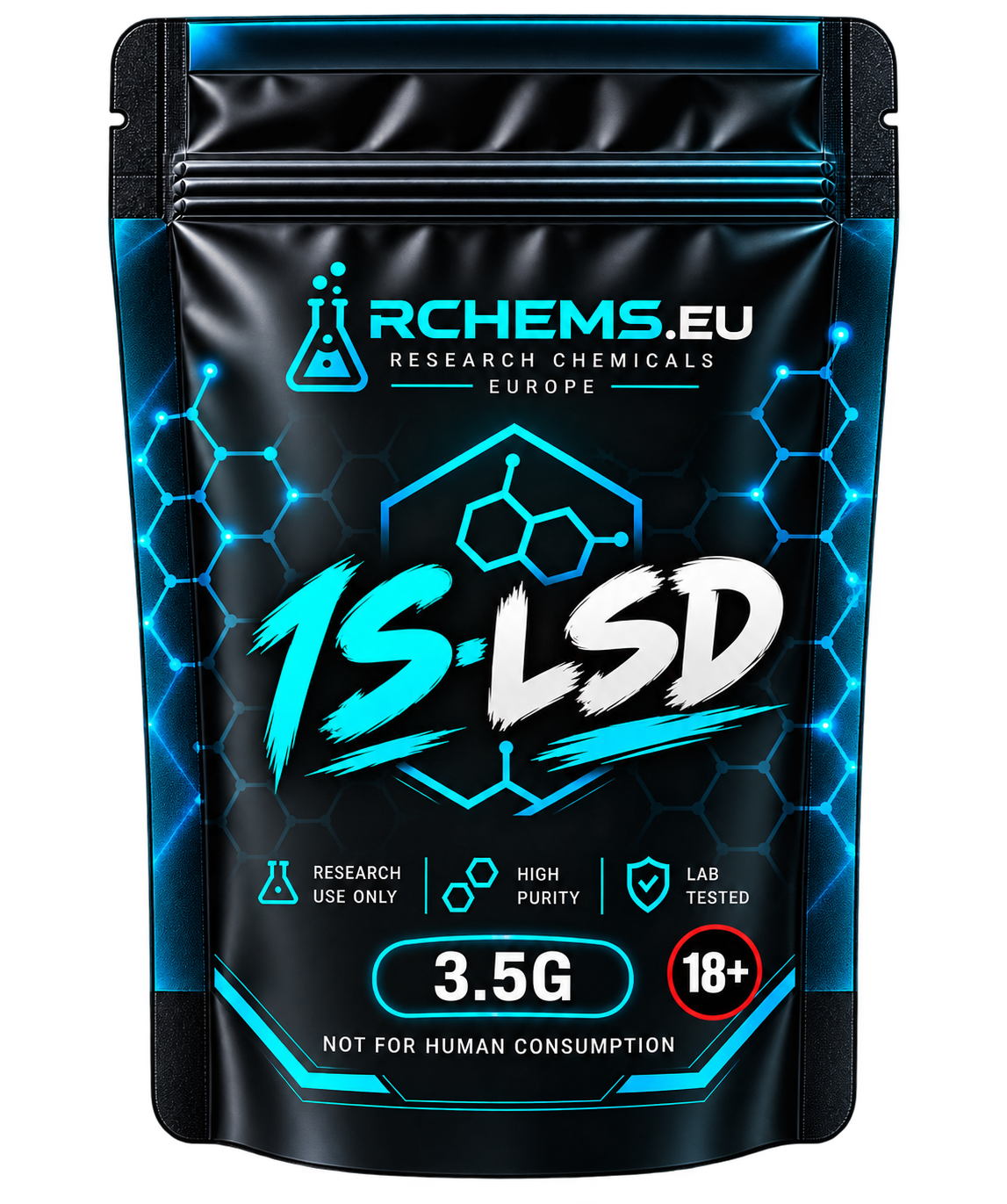
1S-LSD
€ 20,00
Explore 1S-LSD chemical information, molecular formula, molecular weight, analytical identifiers and research context for scientific reference.
1S-LSD Research Information
1S-LSD
is a synthetic compound belonging to the lysergamide family.
It is also identified in chemical databases as
1-[3-(trimethylsilyl)propanoyl] lysergic acid diethylamide.
The compound has attracted analytical and forensic interest
because of its distinctive molecular structure and relationship
to other N1-substituted lysergamides.
Public chemical databases provide detailed structural information
for the compound, while recent forensic research has examined its
identification in samples. This makes the substance relevant to
analytical chemistry, forensic toxicology and research into
emerging lysergamides.
Chemical Identity
The chemical name associated with
1S-LSD
is
1-[3-(trimethylsilyl)propanoyl] lysergic acid
diethylamide. It contains an ergoline-based structure,
a diethylamide group and a 3-(trimethylsilyl)propanoyl
substituent.
PubChem lists the compound under CID
172875719, with the molecular formula
C26H37N3O2Si and molecular weight of
approximately 451.7 g/mol. :contentReference[oaicite:0]{index=0}
Key Chemical Specifications
Molecular Structure and Analytical Profile
The molecular formula of
1S-LSD
is C26H37N3O2Si. The presence of silicon distinguishes
its molecular composition from many other commonly discussed
lysergamides. PubChem records the InChIKey
RYNRSMKGPSUXLC-AUSIDOKSSA-N for the compound. :contentReference[oaicite:1]{index=1}
Analytical reference data can be useful when laboratories need
to differentiate structurally related compounds. Certificate
data from a commercial analytical reference standard reports
HPLC, mass-spectrometry and NMR characterization, illustrating
the types of techniques used for chemical verification. :contentReference[oaicite:2]{index=2}
Research and Forensic Context
Interest in
1S-LSD
includes forensic identification and analytical chemistry.
Recent literature has reported the identification of this
compound in paper-sheet samples distributed online, providing
additional reference information for laboratories investigating
emerging lysergamides.
Analytical research involving novel substances is important
because closely related compounds can share similar structural
features. Combining chromatographic separation with mass
spectrometry or spectroscopic techniques can provide a stronger
basis for compound identification than relying on a single
characteristic.
Research Information for the Netherlands
Researchers and laboratories in the Netherlands should verify
the current Dutch legal and regulatory position before acquiring,
possessing, importing or analysing this material. The legal
classification of emerging substances can change, and rules
applicable to one European country should not automatically be
assumed to apply in another.
For legitimate laboratory work, researchers should consult
current Dutch regulations, relevant authorities and their
institution’s chemical-safety procedures before beginning
research involving this compound.
Frequently Asked Questions
What is 1S-LSD?
1S-LSD
is a synthetic lysergamide identified chemically as
1-[3-(trimethylsilyl)propanoyl] lysergic acid diethylamide.
It has been documented in chemical and forensic literature.
What is the molecular formula?
The molecular formula is
C26H37N3O2Si, and the molecular weight is
approximately 451.7 g/mol. :contentReference[oaicite:3]{index=3}
What is the PubChem CID?
PubChem lists
1S-LSD
under CID 172875719. :contentReference[oaicite:4]{index=4}
How can this compound be identified analytically?
Analytical identification can involve complementary methods
such as chromatography, mass spectrometry and nuclear magnetic
resonance spectroscopy. Reference-standard data can assist
laboratories in comparing observed analytical results with
established chemical characteristics. :contentReference[oaicite:5]{index=5}
Is a CAS number available?
PubChem’s current record identifies the compound through its
PubChem CID and other structural identifiers rather than
providing a CAS Registry Number. :contentReference[oaicite:6]{index=6}
What should researchers in the Netherlands consider?
Researchers should verify the current Dutch legal status and
applicable institutional requirements before conducting work
involving this compound. Appropriate laboratory safety
procedures and chemical documentation should also be followed.
Related Research Resources
Additional research-chemical information and related laboratory
resources can be found through
RC-KING
.
Research Information:
This page is provided for scientific, analytical and
educational reference. Verify applicable laws, regulations,
safety requirements and institutional procedures before
handling chemical materials.
1 review for 1S-LSD
Add a review
Related products
Buy Research Chemicals Online
Buy Research Chemicals Online
Buy Research Chemicals Online
Buy Research Chemicals Online
Buy Research Chemicals Online
Buy Research Chemicals Online
Buy Research Chemicals Online
Buy Research Chemicals Online
Tomas Puebla –
Una sustancia muy interesante desde el punto de vista investigador con potencia moderada y duración larga