

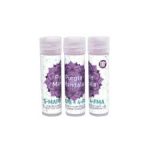

Yellow Mandala
Price range: € 8,21 through € 298,13
The number #1 of our Mandala mixes!
NB! This Purple Mandala mix contains 5–MAPB and 4-FMA.
- Chemical Formula: C12H16N2
- Molecular Weight: 188.27 g/mol
- Melting Point: 40-60 °C
- Boiling Point: 160-165 °C
Yellow Mandala “Benzo Fury”
The Yellow Mandala mix with 6-APB contains sufficient research to be carried out by 1 person. Always start your research with a quarter or half a tube and look for the best dosage for your research!
6-APB, also known as “Benzofury” or “6-(2-aminopropyl)benzofuran,” is a synthetic compound that belongs to the amphetamine and phenethylamine classes. It acts as a serotonin-norepinephrine-dopamine reuptake inhibitor (SNDRI) and a potent agonist for the serotonin 2B receptor.
Chemical Structure:
6-APB has a chemical structure that consists of a benzofuran ring fused with a phenyl ring and an amino-propyl chain. This structure allows it to interact with various neurotransmitter systems in the brain.
Pharmacology and Effects:
As an SNDRI and serotonin 2B receptor agonist, 6-APB produces a combination of stimulant and entactogenic effects. The specific effects can vary depending on the dosage, individual tolerance, and other factors.
Commonly reported effects of 6-APB include euphoria, increased sociability, empathy, enhanced sensory perception, and heightened emotional experiences. It may also induce mild hallucinogenic effects at higher doses. However, it’s important to note that the effects of 6-APB can be unpredictable and may vary between individuals.
Health Risks and Safety:
The use of 6-APB carries significant health risks. It is a potent substance that can have stimulant and hallucinogenic effects, which may lead to adverse reactions. These can include increased heart rate, elevated blood pressure, anxiety, paranoia, hallucinations, and potential serotonin syndrome.
Long-term use of 6-APB may also lead to dependence and withdrawal symptoms. It is important to prioritize safety, practice harm reduction strategies, and avoid combining 6-APB with other substances, especially alcohol or other drugs.
Related products

3-HO-PCE (3-Hydroxyeticyclidine)
3-HO-PCE (3-Hydroxyeticyclidine) is a synthetic dissociative research chemical belonging to the arylcyclohexylamine class. Structurally related to eticyclidine (PCE), the 3-hydroxy substitution on the phenyl ring distinguishes this analog and significantly alters its pharmacological profile as an NMDA receptor antagonist. The presence of the phenolic hydroxyl group introduces unique hydrogen-bonding capabilities and influences receptor binding kinetics, while the N-ethyl side chain differentiates it from the piperidine-ring-containing PCP analogs. RChems EU supplies 3-HO-PCE as a high-purity crystalline powder with verified 99%+ purity, ensuring reproducible results for in vitro receptor binding assays, neuropharmacological investigations, and structure-activity relationship (SAR) studies.
Physical and Chemical Properties
-
Chemical Name: 3-Hydroxyeticyclidine; N-ethyl-1-(3-hydroxyphenyl)cyclohexan-1-amine
-
Molecular Formula: C₁₄H₂₁NO
-
Molecular Weight: 219.32 g/mol
-
Appearance: White to off-white crystalline powder
-
Purity: ≥99% (Verified by HPLC, NMR, MS)
-
Solubility: Soluble in ethanol, DMSO, and organic solvents
-
CAS Number: Not publicly assigned (research chemical)
-
Storage: Cool, dry, dark environment (room temperature recommended)
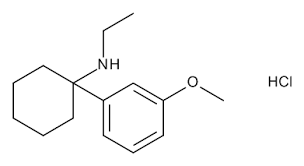
3-Me-PCE HCl (3-Methyleticyclidine)
3-Me-PCE HCl (3-Methyleticyclidine hydrochloride) is a synthetic dissociative research chemical belonging to the arylcyclohexylamine class. Structurally related to eticyclidine (PCE), the 3-methyl substitution on the phenyl ring distinguishes this analog and alters its pharmacological profile as an NMDA receptor antagonist. The hydrochloride salt form enhances aqueous solubility and crystalline stability. RChems EU supplies 3-Me-PCE as a high-purity crystalline hydrochloride salt with verified 99%+ purity, ensuring reproducible results for in vitro receptor binding assays, neuropharmacological investigations, and structure-activity relationship (SAR) studies.
Physical and Chemical Properties
-
Chemical Name: 3-Methyleticyclidine hydrochloride; N-ethyl-1-(3-methylphenyl)cyclohexan-1-amine hydrochloride
-
Molecular Formula: C₁₅H₂₃N · HCl
-
Molecular Weight: 253.81 g/mol (freebase: 217.35 g/mol)
-
Appearance: White to off-white crystalline powder
-
Purity: ≥99% (Verified by HPLC, NMR, MS)
-
Solubility: Soluble in water, ethanol, and DMSO (HCl salt)
-
CAS Number: Not publicly assigned (research chemical)
-
Storage: Cool, dry, dark environment (room temperature recommended)
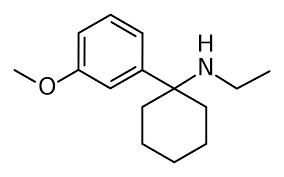
3-MeO-PCE (3-methoxyeticyclidine)
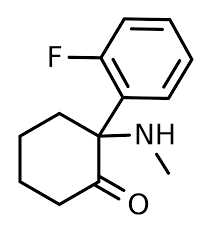
Chem-mist 2F-DCK spray 30%
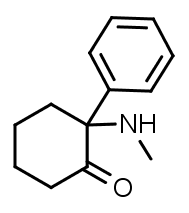
DCK (Deschloroketamine)

DMXE 40mg Pellets (Deoxymethoxetamine)

Flunitrazolam 0.25mg Pellets
