

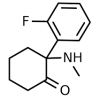

3-HO-PCE (3-Hydroxyeticyclidine)
Price range: € 24,95 through € 385,95
3-HO-PCE (3-Hydroxyeticyclidine) is a synthetic dissociative research chemical belonging to the arylcyclohexylamine class. Structurally related to eticyclidine (PCE), the 3-hydroxy substitution on the phenyl ring distinguishes this analog and significantly alters its pharmacological profile as an NMDA receptor antagonist. The presence of the phenolic hydroxyl group introduces unique hydrogen-bonding capabilities and influences receptor binding kinetics, while the N-ethyl side chain differentiates it from the piperidine-ring-containing PCP analogs. RChems EU supplies 3-HO-PCE as a high-purity crystalline powder with verified 99%+ purity, ensuring reproducible results for in vitro receptor binding assays, neuropharmacological investigations, and structure-activity relationship (SAR) studies.
Physical and Chemical Properties
-
Chemical Name: 3-Hydroxyeticyclidine; N-ethyl-1-(3-hydroxyphenyl)cyclohexan-1-amine
-
Molecular Formula: C₁₄H₂₁NO
-
Molecular Weight: 219.32 g/mol
-
Appearance: White to off-white crystalline powder
-
Purity: ≥99% (Verified by HPLC, NMR, MS)
-
Solubility: Soluble in ethanol, DMSO, and organic solvents
-
CAS Number: Not publicly assigned (research chemical)
-
Storage: Cool, dry, dark environment (room temperature recommended)
Buy 3-HO-PCE Research Chemical Online – USA, Europe & Worldwide
The arylcyclohexylamine class of research chemicals continues to yield valuable insights into NMDA receptor pharmacology and the mechanisms of dissociative anesthesia. 3-HO-PCE (3-Hydroxyeticyclidine) represents a distinctive structural modification within this class, combining two key features: a hydroxyl group at the 3-position of the phenyl ring and an ethyl group on the amine nitrogen (rather than the piperidine ring found in PCP analogs). This unique combination of a polar, hydrogen-bond-donating phenolic substituent and an open-chain N-ethyl moiety creates a molecular probe with distinct pharmacological properties.
The presence of the phenolic -OH group introduces a polar, hydrogen-bond-donating moiety that can form additional interactions within the NMDA receptor’s phencyclidine binding site. Meanwhile, the N-ethyl side chain (as opposed to the cyclic piperidine ring of PCP) alters the compound’s basicity, conformational flexibility, and overall receptor interaction kinetics. For researchers investigating the molecular mechanisms of NMDA receptor antagonists and the structure-activity relationships of arylcyclohexylamines, 3-HO-PCE offers a distinct chemical probe to explore how both ring substitution and amine structure affect receptor binding, selectivity, and functional activity. When you buy 3-HO-PCE from RChems EU, you acquire a high-purity research compound manufactured under strict quality controls. Our 99% pure 3-HO-PCE is intended exclusively for laboratory research—not for human or animal consumption—enabling precise, reproducible experiments in receptor pharmacology, neurochemistry, and behavioral neuroscience.
Key Features & Benefits
- Verified 99%+ Purity: Every batch undergoes independent HPLC, LC-MS, and ¹H/¹³C NMR analysis to guarantee ≥99% purity.
- Arylcyclohexylamine Derivative: Structural analog of eticyclidine (PCE) for comparative NMDA receptor antagonist research.
- 3-Hydroxy Phenyl Substitution: The hydroxyl group introduces hydrogen-bonding capacity, enabling SAR studies on polar vs. non-polar substitutions at the 3-position.
- N-Ethyl Side Chain: The ethylamine moiety (vs. piperidine in PCP) alters basicity and receptor interaction kinetics, allowing comparisons across the arylcyclohexylamine family.
- Potent NMDA Receptor Antagonist: Acts as a non-competitive antagonist at the NMDA receptor’s PCP binding site, blocking glutamatergic neurotransmission in research models.
- Distinct Pharmacokinetic Profile: The phenolic group may influence metabolic stability and glucuronidation pathways.
- Worldwide Delivery: Fast, tracked shipping to the USA, Canada, Europe, Australia, and select Asian research hubs.
- Discreet Packaging Protocol: Plain outer boxes, unmarked labels, vacuum-sealed inner bags—no chemical names on the parcel.
Product Specifications
| Property | Specification |
|---|---|
| IUPAC Name | N-ethyl-1-(3-hydroxyphenyl)cyclohexan-1-amine |
| CAS Number | Not publicly assigned (research chemical) |
| Synonyms | 3-Hydroxyeticyclidine, 3-HO-PCE |
| Physical State | Crystalline powder |
| Purity Analysis | HPLC (≥99%), LC-MS, ¹H/¹³C NMR |
| Loss on Drying | <0.5% |
| Residual Solvents | Compliant with ICH Q3C guidelines |
| Heavy Metals | <20 ppm |
| Chemical Class | Arylcyclohexylamine / NMDA receptor antagonist |
Applications & Usage
⚠️ Strictly for laboratory research use only. Not for human or animal consumption.
3-HO-PCE is utilized in a range of non-clinical, pre-clinical, and basic science research applications. Typical areas of investigation include:
- NMDA Receptor Binding Assays: Evaluating affinity (Ki) for the phencyclidine (PCP) binding site within the NMDA receptor ion channel using radioligand displacement (e.g., [³H]MK-801 or [³H]TCP) in rat brain homogenates or transfected cell lines expressing recombinant NMDA receptor subunits.
- Ion Channel Functional Studies: Measuring NMDA receptor-mediated calcium influx or electrophysiological recordings (patch-clamp) to assess the potency and efficacy of channel blockade.
- Structure-Activity Relationship (SAR) Investigations: Systematically comparing 3-HO-PCE with PCE (unsubstituted phenyl), 3-Me-PCE (3-methyl substitution), 3-HO-PCP (3-hydroxy with piperidine ring), and 3-MeO-PCE (3-methoxy substitution) to map the impact of:
- Phenyl ring substitution (polar vs. non-polar, hydrogen-bond donor vs. acceptor)
- Amine structure (N-ethyl open chain vs. piperidine ring)
on NMDA receptor affinity, selectivity, and use-dependent block kinetics.
- Glutamatergic Neurotransmission Research: Investigating the role of NMDA receptors in synaptic plasticity, long-term potentiation (LTP), and excitotoxicity using in vitro brain slice preparations or neuronal cell cultures.
- Metabolic Stability Research: Evaluating phase I and phase II metabolism using hepatic microsomes or S9 fractions with LC-MS/MS quantification, particularly studying N-deethylation, hydroxylation, and glucuronidation of the phenolic -OH group.
- Analytical Reference Standard: Serving as a high-purity calibrant for forensic toxicology, wastewater analysis, or novel psychoactive substance (NPS) screening methods.
- In Vitro Neurotoxicity Screening: Assessing cytotoxicity, mitochondrial function, and oxidative stress markers in neuronal cell cultures (e.g., cortical neurons, SH-SY5Y cells).
Researchers are encouraged to consult peer-reviewed literature (e.g., Journal of Pharmacology and Experimental Therapeutics, Neuropharmacology, European Journal of Pharmacology, ACS Chemical Neuroscience) for established in vitro protocols. RChems EU does not provide research protocols but guarantees the compound’s structural integrity and purity for such applications.
Purity & Testing
Reproducibility in NMDA receptor pharmacology and neuropharmacology research depends critically on compound purity. Impurities—particularly other arylcyclohexylamine isomers, synthetic intermediates, or oxidation products of the phenolic group—can produce false-positive signals in receptor binding assays or confound functional readouts. That is why 99% pure 3-HO-PCE from RChems EU is subjected to a multi-laboratory quality control workflow:
- High-Performance Liquid Chromatography (HPLC-DAD): Quantitative analysis at multiple wavelengths. Special attention is given to detecting oxidation products of the phenolic hydroxyl group. Minimum acceptance criterion: ≥99.0% peak area purity.
- Liquid Chromatography-Mass Spectrometry (LC-MS): Confirms molecular ion [M+H]⁺ = 220.2 and detects trace-level organic impurities down to 0.05%, including potential oxidation products.
- Nuclear Magnetic Resonance (NMR): Both proton (¹H) and carbon-13 (¹³C) NMR verify the correct cyclohexyl ring system, N-ethyl side chain, and 3-hydroxy substitution pattern on the phenyl ring (characteristic aromatic splitting and exchangeable phenolic OH proton). Any spectral deviation—particularly signals indicative of oxidation or incorrect substitution—triggers batch rejection.
- Residual Solvent Analysis (GC-MS): Ensures compliance with ICH limits for Class 2 and Class 3 solvents.
- Heavy Metal Testing (ICP-MS): Confirms levels below 20 ppm for lead, arsenic, cadmium, and mercury.
Each batch is assigned a unique lot number, and a Certificate of Analysis (COA) is available upon request. This rigorous testing ensures that when you buy 3-HO-PCE for research, you receive a compound that performs consistently from order to order.
Safety & Handling Guidelines
⚠️ FOR LABORATORY RESEARCH USE ONLY. NOT FOR HUMAN OR ANIMAL CONSUMPTION.
- Personal Protective Equipment (PPE): Always wear nitrile gloves, a lab coat, and chemical splash goggles when handling 3-HO-PCE powder.
- Engineering Controls: Use a certified chemical fume hood or glove box to prevent inhalation of airborne particulates.
- First Aid Measures:
- Inhalation: Remove to fresh air. If breathing difficulty persists, seek medical attention.
- Skin Contact: Wash with soap and copious water for 15 minutes. Remove contaminated clothing.
- Eye Contact: Rinse cautiously with water for 15 minutes. Consult an ophthalmologist if irritation persists.
- Ingestion: Do NOT induce vomiting. Rinse mouth and seek immediate medical attention.
- Spill Management: Vacuum or sweep gently (avoid generating dust). Collect in a sealed, labeled container for hazardous waste disposal.
- Storage: Store in a tightly sealed, amber glass vial at room temperature (20–25°C) in a desiccator, protected from light and moisture. The phenolic hydroxyl group may be susceptible to oxidation upon prolonged exposure to air.
By purchasing from RChems EU, you confirm that you are a qualified researcher (or authorized agent) and that your facility can handle this compound safely.
Global Shipping & Discreet Delivery
RChems EU has perfected a discreet, reliable global logistics system for all research chemical orders, including 3-HO-PCE. We understand that confidentiality is essential for many academic and private research organizations.
What discreet delivery means for you:
- Plain Outer Packaging: Your order arrives in a non-descript padded envelope or small cardboard box. No logos, no brand names, no chemical identifiers.
- Unmarked Shipping Label: The return address uses a generic name (e.g., “L.C. Distribution” or “WH Logistics”). No reference to “RChems EU” or “3-HO-PCE.”
- Vacuum-Sealed Inner Bags: Each bag is heat-sealed to prevent leakage, odor, and tampering. No chemical name appears on the inner bag.
- No External Documentation: Invoices, COAs, or packing slips are sent via encrypted email only—never placed inside the parcel.
Fast worldwide delivery times (tracked):
| Region | Estimated Transit Time |
|---|---|
| USA & Canada | 5–9 business days |
| Europe (UK, Germany, France, Spain, Italy, Netherlands) | 3–7 business days |
| Australia & New Zealand | 7–12 business days |
| Rest of World (select countries) | 7–14 business days |
Every shipment includes a real-time tracking number. Expedited courier options (FedEx Priority, DHL Express) are available at checkout for faster delivery (2–5 days globally).
Why Choose RChems EU?
- Stealth Packaging Experts: Over 7,000 successful shipments to 45+ countries with minimal customs interference.
- Third-Party Verified Purity: Every batch is independently tested. We do not sell unverified or “research grade” material without documentation.
- Responsive Scientific Support: Technical inquiries answered within 24 hours. Replacement policy for lost or damaged shipments (terms apply).
- No Minimum Order Quantity (MOQ): Order 0.50 grams or 10 grams—same meticulous packaging and quality standards.
- Flexible Payment Methods: Secure cryptocurrency (BTC, ETH, USDT) and select credit card options.
- Global Compliance Awareness: We monitor international regulations and adjust shipping policies accordingly.
Legal & Safety Disclaimer
⚠️ IMPORTANT – READ CAREFULLY BEFORE PURCHASING
3-HO-PCE (3-Hydroxyeticyclidine) is sold by RChems EU strictly as a research chemical and is not for human consumption, animal testing, or any form of in vivo use without appropriate institutional ethical approval. This product is not a pharmaceutical, medicinal product, dietary supplement, or recreational substance.
Legal Status Varies by Jurisdiction: 3-HO-PCE may be a controlled substance or regulated analog in certain countries, states, or territories. In the United States, PCE is not explicitly scheduled at the federal level, but structural analogs may be considered controlled substance analogues under the Federal Analogue Act (21 U.S.C. § 813) if intended for human consumption. Several European countries have specific analogue legislation or blanket scheduling for arylcyclohexylamines. It is your sole responsibility to verify the legal status of 3-HO-PCE in your country, state, or province before ordering.
By completing your purchase, you certify that:
- You are at least 18 years of age.
- You are a qualified researcher affiliated with a bona fide laboratory or academic institution.
- You will use this product exclusively for lawful, laboratory-based research purposes.
- You will not introduce this compound into the body of any human or animal.
RChems EU reserves the right to cancel any order that appears destined for non-research use or for a jurisdiction where 3-HO-PCE is prohibited.
FAQ Section
1. What is 3-HO-PCE used for in research?
3-HO-PCE (3-Hydroxyeticyclidine) is used in neuropharmacological research to study NMDA receptor antagonism, the phencyclidine (PCP) binding site within the NMDA receptor ion channel, and structure-activity relationships among arylcyclohexylamine derivatives. It is particularly valuable for SAR studies comparing the effects of polar (hydroxy) vs. non-polar (methyl) substitutions at the 3-position of the phenyl ring, as well as comparing N-ethyl (PCE-like) vs. piperidine (PCP-like) amine structures. Typical applications include radioligand binding assays, ion channel functional studies, and metabolic stability research including glucuronidation pathways.
2. Is 3-HO-PCE legal to buy and possess for research?
Legality depends on your jurisdiction. 3-HO-PCE is not explicitly scheduled at the US federal level but may be considered a controlled substance analogue under the Federal Analogue Act (21 U.S.C. § 813) if intended for human consumption. Many European countries have analogue legislation or specific scheduling for arylcyclohexylamines. You must check your local regulations before ordering. RChems EU ships on the condition that you assume full legal responsibility.
3. How discreet is the shipping from RChems EU?
Extremely discreet. All 3-HO-PCE orders are shipped in plain, unmarked packaging with no external branding. The shipping label uses a generic return address. Inner bags are vacuum-sealed with no chemical names or CAS numbers visible. Our stealth protocol has enabled successful deliveries to over 45 countries with a 99%+ success rate.
4. What is the guaranteed purity level of your 3-HO-PCE?
Every batch of 3-HO-PCE from RChems EU is independently tested to be ≥99% pure via HPLC-DAD, with confirmation by LC-MS and ¹H/¹³C NMR. Special attention is given to detecting oxidation products of the phenolic hydroxyl group. A lot-specific Certificate of Analysis (COA) is available for every order upon request.
5. How is the 99% purity tested?
We employ a five-tier analytical protocol:
- HPLC-DAD for quantitative purity (≥99% peak area at multiple wavelengths), with methods optimized to detect oxidation products.
- LC-MS for molecular weight confirmation ([M+H]⁺ = 220.2) and trace impurity detection down to 0.05%.
- ¹H and ¹³C NMR for structural confirmation (cyclohexyl ring, N-ethyl side chain, 3-hydroxy substitution pattern with exchangeable phenolic OH proton).
- GC-MS for residual solvent analysis (ICH compliance).
- Heavy metal testing (ICP-MS) to confirm levels below 20 ppm.
All testing is performed by an ISO 17025-accredited contract laboratory.
6. Can you ship 3-HO-PCE to my country (USA, UK, Germany, Australia, Canada)?
RChems EU ships 3-HO-PCE worldwide, including the USA, Canada, United Kingdom, Germany, France, Italy, Spain, Netherlands, Switzerland, Norway, Australia, and New Zealand. However, due to varying legal statuses of arylcyclohexylamines, we strongly recommend contacting our support team before ordering if you are located in Germany, Sweden, Finland, or any country with broad analogue legislation. For countries with strict import controls (e.g., Japan, Singapore, South Korea), we do not currently ship 3-HO-PCE.
7. How should I store 3-HO-PCE after delivery?
Store 3-HO-PCE in a tightly sealed, amber glass vial at room temperature (20–25°C) in a desiccator, protected from light and moisture. The phenolic hydroxyl group may be susceptible to oxidation upon prolonged exposure to air. For long-term storage (>6 months), refrigeration at 4°C under inert atmosphere (argon or nitrogen) is recommended. Always allow the sealed container to reach room temperature before opening to prevent condensation.
8. What is the difference between 3-HO-PCE and PCE (eticyclidine)?
The key structural difference is the hydroxyl group at the 3-position of the phenyl ring in 3-HO-PCE. PCE (eticyclidine) has no substitution on the phenyl ring. Both compounds share the same N-ethyl side chain and cyclohexyl core. In NMDA receptor research, the addition of a hydroxyl group at the 3-position:
- Introduces a hydrogen-bond-donating polar moiety
- Alters the compound’s electronic properties and lipophilicity
- Affects binding affinity at the PCP site of the NMDA receptor
- Provides a site for phase II metabolism (glucuronidation)
Comparing these two compounds allows researchers to map the impact of polar substitution on arylcyclohexylamine pharmacology while keeping the N-ethyl structure constant.
9. What is the difference between 3-HO-PCE and 3-HO-PCP?
The key structural difference lies in the amine moiety:
- 3-HO-PCP has a piperidine ring (cyclic secondary amine) with a 3-hydroxyphenyl group
- 3-HO-PCE has an N-ethyl chain (linear secondary amine) with a 3-hydroxyphenyl group
Both share the same 3-hydroxyphenyl substitution on the cyclohexyl ring. In NMDA receptor research, the difference between a cyclic piperidine ring (PCP-like) and an open-chain ethylamine (PCE-like) affects:
- Basicity and ionization state at physiological pH
- Conformational flexibility and receptor binding kinetics
- Lipophilicity and blood-brain barrier permeability
Comparing these two compounds allows researchers to investigate the impact of cyclic vs. acyclic amine structure on arylcyclohexylamine pharmacology while keeping the 3-hydroxy substitution constant.
10. What is the difference between 3-HO-PCE and 3-MeO-PCE?
The difference lies in the phenyl ring substituent:
- 3-HO-PCE has a hydroxyl group (-OH) at the 3-position (hydrogen-bond donor)
- 3-MeO-PCE has a methoxy group (-OCH₃) at the 3-position (hydrogen-bond acceptor, more lipophilic)
Both share the same N-ethyl side chain and cyclohexyl core. Comparing these two compounds allows researchers to investigate how hydrogen-bond donor (OH) vs. hydrogen-bond acceptor (OCH₃) substituents at the same position (3-position) affect NMDA receptor binding, selectivity, functional activity, and metabolic stability.
11. What is the difference between 3-HO-PCE and 3-Me-PCE?
The difference lies in the phenyl ring substituent:
- 3-HO-PCE has a hydroxyl group (-OH) at the 3-position (polar, hydrogen-bond donor)
- 3-Me-PCE has a methyl group (-CH₃) at the 3-position (non-polar, hydrophobic)
Both share the same N-ethyl side chain and cyclohexyl core. Comparing these two compounds allows researchers to investigate how polar vs. non-polar substituents at the same position (3-position) affect NMDA receptor binding, selectivity, functional activity, and metabolic stability. This is a classic SAR study comparing electronic and hydrogen-bonding effects vs. steric and hydrophobic effects.
12. Do you offer a reshipment policy if customs seizes my package?
Yes. RChems EU offers a one-time reshipment policy for confirmed customs seizures in most countries, provided that the original shipping address is valid and the buyer did not violate known local laws. Crypto payments qualify for the full reshipment guarantee. Terms and conditions apply—please contact customer support for details.
13. Can I get a Certificate of Analysis (COA) before ordering?
Absolutely. Contact our support team via email with the product name (3-HO-PCE or 3-Hydroxyeticyclidine) and your research affiliation. We will provide a redacted or full COA for the current batch, including HPLC chromatograms and NMR spectra, subject to verification of legitimate research intent.
Ready to advance your NMDA receptor and arylcyclohexylamine SAR research? Order high-purity 3-HO-PCE from RChems EU today and experience unmatched product quality, stealth global delivery, and professional scientific support. Buy 3-HO-PCE for Research
RChems EU – Your trusted global supplier of 99% pure research chemicals.
| Quantity | 0.50 grams, 1 gram, 10 grams, 2 grams, 5 grams |
|---|
Be the first to review “3-HO-PCE (3-Hydroxyeticyclidine)”
Related products
Buy Benzodiazepines
Buy Arylcyclohexylamine
Buy Arylcyclohexylamine
Buy Arylcyclohexylamine
Buy Benzodiazepines

Buy Arylcyclohexylamine
Buy Arylcyclohexylamine

Buy Arylcyclohexylamine
Reviews
There are no reviews yet.