
Proscaline hydrochloride
Price range: € 40,00 through € 600,00
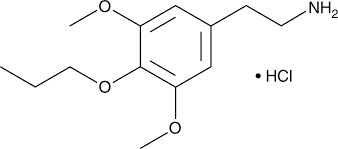
Proscaline hydrochloride (4-propoxy-3,5-dimethoxyphenethylamine hydrochloride) is a ring-substituted phenethylamine derivative belonging to the mescaline-like class of serotonergic research compounds. Structurally related to escaline and mescaline, Proscaline features a propoxy group at the 4-position, which significantly alters its receptor binding profile and pharmacokinetic properties. Supplied by RChems EU, a trusted global supplier of 99% pure research chemicals, this hydrochloride salt form ensures optimal stability, solubility, and batch-to-batch consistency for advanced neuropharmacology studies.
Physical and Chemical Properties:
-
Appearance: White to off-white crystalline powder
-
Purity: ≥99% (HPLC-MS verified)
-
Molecular Formula: C₁₃H₂₁NO₃ · HCl
-
Molecular Weight: 275.77 g/mol (as free base); 312.23 g/mol (as HCl salt)
-
Solubility: Freely soluble in water, DMSO, and ethanol
-
Melting Point: 195–200°C (decomposes)
-
Storage: Cool, dry, dark environment (15–25°C), sealed, desiccated
Buy Proscaline Hydrochloride Research Chemical Online USA, Europe and Worldwide
In the systematic study of structure-activity relationships (SAR) among serotonergic phenethylamines, Proscaline hydrochloride occupies a unique and informative position. As a 4-propoxy analog of the classical psychedelic compound mescaline (3,4,5-trimethoxyphenethylamine), Proscaline allows researchers to investigate how alkoxy chain length at the 4-position affects 5-HT₂A receptor binding affinity, functional selectivity, and metabolic stability. First characterized by Alexander Shulgin in his seminal work on phenethylamines, Proscaline has since become a valuable molecular probe for medicinal chemists and neuropharmacologists studying the structural determinants of serotonin receptor activation.
If you need to buy Proscaline hydrochloride for controlled laboratory research into serotonergic signaling, receptor binding kinetics, or SAR optimization, you require a supplier that guarantees analytical-grade purity, global logistics, and absolute discretion. Alpha Lab Chems delivers exactly that. As a trusted global supplier of 99% pure research chemicals, we provide batch-verified Proscaline HCl to research institutions, pharmaceutical R&D teams, and qualified independent scientists across the USA, Canada, Europe, Australia, and Asia. Every order is backed by rigorous third-party testing, discreet packaging, and fast worldwide delivery.
Key Features & Benefits
- ≥99% Verified Purity – Each batch independently tested using HPLC-MS, NMR, and residual solvent analysis. No synthetic impurities, no degradation products.
- 4-Propoxy Analog – The propoxy group (O-CH₂-CH₂-CH₃) at the 4-position provides a distinct SAR profile compared to methoxy (mescaline), ethoxy (escaline), and butoxy derivatives.
- Hydrochloride Salt Form – Enhanced aqueous solubility and long-term crystalline stability compared to free base forms; ideal for precise buffer preparation.
- 5-HT₂A Receptor Research Tool – Valuable for studying structure-affinity relationships, Gq-mediated calcium signaling, and β-arrestin recruitment pathways.
- Discreet & Secure Shipping – Plain outer packaging, unmarked labels, vacuum-sealed inner bag. No chemical names or supplier branding on the parcel.
- Fast Worldwide Delivery – Express shipping to over 50 countries. Typical transit: 5–9 business days.
- Lot-Specific Certificate of Analysis (CoA) – Available upon request for every batch, documenting purity, mass confirmation, and heavy metal screening.
Product Specifications
| Property | Detail |
|---|---|
| Product Name | Proscaline hydrochloride |
| Synonyms | 4-Propoxy-3,5-dimethoxyphenethylamine HCl; 3,5-Dimethoxy-4-propoxyphenethylamine HCl |
| CAS Number | 39201-82-6 (typical for free base) |
| Purity | >99% (HPLC-MS, area under curve) |
| Chemical Class | Substituted phenethylamine / Mescaline analog |
| Salt Form | Hydrochloride (HCl) |
| Molecular Weight (free base) | 275.77 g/mol |
| Molecular Weight (HCl salt) | 312.23 g/mol |
| Water Content (KF) | <1.0% |
| Residue on Ignition | <0.1% |
| Recommended Storage | 15–25°C, desiccated, protected from light |
| Stability | >24 months under proper storage |
Applications & Usage
Proscaline hydrochloride is intended for laboratory research use only. Typical applications include:
- Structure-Activity Relationship (SAR) Studies: Comparing binding affinities (Ki values) and functional selectivity at 5-HT₂A, 5-HT₂B, 5-HT₂C, and 5-HT₁A receptors across the alkoxy series (methoxy → ethoxy → propoxy → butoxy) to map steric and electronic effects.
- Receptor Binding Assays: Radioligand competition studies (e.g., using [³H]-ketanserin for 5-HT₂A or [³H]-DOI for agonist binding) to determine how 4-propoxy chain length influences receptor recognition.
- Calcium Mobilization Assays: Studying Gq-mediated intracellular calcium release in HEK-293 cells stably expressing human 5-HT₂A receptors.
- Functional Selectivity (Biased Agonism) Research: Comparing Gq activation versus β-arrestin recruitment to determine if alkoxy modifications produce biased signaling profiles.
- Metabolic Stability Studies: Liver microsome assays (human, rat, mouse) to determine how O-dealkylation rates vary with alkoxy chain length.
- In Vivo Behavioral Pharmacology: Controlled animal studies assessing head-twitch response (HTR) as a proxy for 5-HT₂A activation, or drug discrimination paradigms comparing Proscaline to mescaline.
- Molecular Modeling & Docking: Computational studies investigating how the 4-propoxy group interacts with conserved hydrophobic pockets in the 5-HT₂A orthosteric binding site.
All studies must comply with institutional animal care and use committee (IACUC) or equivalent ethical guidelines. Not for human or veterinary consumption.
Purity & Testing
Reproducible research in serotonergic pharmacology depends entirely on compound integrity. Every batch of 99% pure Proscaline hydrochloride from RChems EU undergoes a comprehensive analytical workflow:
- High-Performance Liquid Chromatography (HPLC) – Quantifies main peak purity with UV detection at 220nm, 254nm, and 280nm. Acceptance threshold: ≥99.0% AUC.
- Mass Spectrometry (MS) – Confirms molecular weight (expected [M+H]+ = 276.2 for free base; 312.2 for HCl salt) and detects trace-level synthetic impurities, including des-alkyl or partially alkylated byproducts.
- Nuclear Magnetic Resonance (NMR) – ¹H and ¹³C NMR validate the 3,5-dimethoxy-4-propoxy substitution pattern and confirm the presence of the ethylamine side chain. Integration ratios confirm alkoxy chain integrity.
- Residual Solvent Analysis (Gas Chromatography) – Screens for Class 1, 2, and 3 residual solvents per ICH Q3C guidelines.
- Heavy Metals Testing (ICP-MS) – Ensures lead, arsenic, cadmium, mercury, and other toxic metals are below 1 ppm.
- Karl Fischer Titration – Confirms water content <1%, critical for hydrochloride salt stability.
- Chloride Content Assay – Validates the stoichiometry of the HCl salt form (theoretical Cl⁻ content: ~11.4%).
Why purity matters: Impurities in alkoxy-substituted phenethylamines can produce off-target effects at adrenergic or dopaminergic receptors. Partial dealkylation impurities (e.g., escaline or mescaline contaminants) have significantly different 5-HT₂A binding profiles. When you buy 99% pure Proscaline hydrochloride, you eliminate these confounders, ensuring that your SAR data reflects the intended propoxy substitution.
Safety & Handling Guidelines
- For professional laboratory use only. Must be handled by trained researchers wearing appropriate PPE (nitrile gloves, lab coat, safety goggles, face shield).
- Not for human, animal, or therapeutic use. Do not ingest, inhale, inject, or apply to skin/mucous membranes.
- First aid: Skin contact – wash with soap and water for 15 minutes. Eye contact – rinse with saline or water for 15 minutes, seek medical attention. Inhalation – move to fresh air, seek medical attention if respiratory distress occurs.
- Spill management: Vacuum with HEPA filter or wet-wipe; avoid generating airborne dust. Dispose as hazardous waste.
- Storage: Keep container tightly sealed in a cool, dry, well-ventilated area away from incompatible substances (strong oxidizers, strong acids).
- Disposal: Follow institutional hazardous waste protocols; incineration recommended.
Global Shipping & Discreet Delivery
RChems EU understands that confidentiality and delivery speed are as critical as product quality—especially for novel research compounds like Proscaline. When you order Proscaline hydrochloride for research, here is exactly what to expect:
Discreet Packaging Protocol:
- Plain outer box – No logos, no brand names, no chemical identifiers.
- Unmarked shipping label – Generic return address (e.g., “Logistics Services”).
- No external documentation – Invoices and CoAs are emailed only.
- Vacuum-sealed inner bag – Eliminates moisture ingress, prevents contamination, and adds tamper evidence.
- Opaque inner wrap – Contents cannot be identified even if outer box is damaged.
- Desiccant included – Maintains low humidity inside the sealed bag.
Fast Worldwide Delivery:
- United States & Canada: 5–7 business days (Express courier: UPS / FedEx).
- Europe (EU & UK): 4–6 business days (DHL Express).
- Australia & New Zealand: 7–9 business days.
- Asia (Japan, Singapore, South Korea): 6–8 business days.
- Rest of World: 10–12 business days (subject to customs).
Tracking numbers provided within 24 hours of dispatch. We offer reshipment or refund for legitimate non-delivery or customs seizure (excluding regions where Proscaline or related phenethylamines are explicitly banned).
Why Choose RChems EU?
- Verified 99%+ Purity – Every batch tested via HPLC-MS, NMR, GC, and ICP-MS. CoA available on request.
- Specialist in Mescaline Analogs – Expertise in 4-alkoxy-substituted phenethylamines and SAR-focused research compounds.
- Stealth, Discreet Packaging – Plain boxes, unmarked labels, no chemical names on parcel. Maximum privacy guaranteed.
- Fast Global Shipping – Express delivery to the USA, Europe, and worldwide. Tracking included.
- Responsive Scientific Support – Research-grade inquiries answered within 24 hours.
- No Minimum Order – Single grams available for pilot studies; bulk discounts for institutions.
- Secure Payments – Cryptocurrency (BTC, ETH) and credit card options.
We are not a reseller or marketplace. We are a trusted global supplier of 99% pure research chemicals, and Proscaline hydrochloride is one of our most specialized serotonergic research tools for alkoxy SAR studies.
Legal & Safety Disclaimer
IMPORTANT: Proscaline hydrochloride is sold strictly for research and laboratory use only. It is not a drug, medicine, food additive, dietary supplement, or therapeutic agent. It is not for human consumption, animal treatment, or any clinical application. This compound has no approved medical use. By placing an order, you affirm that you are at least 18 years of age and that you will comply with all applicable local, state, and federal laws regarding the purchase, import, and handling of research chemicals. Proscaline is structurally similar to mescaline, a Schedule I substance in the United States, and may be regulated under analogue laws in some jurisdictions. RChems EU reserves the right to cancel any order where local regulations prohibit this compound. Do not buy Proscaline hydrochloride unless you are a qualified researcher in a properly equipped laboratory.
FAQ Section
1. What is Proscaline hydrochloride used for in research?
Proscaline hydrochloride is a 4-propoxy-3,5-dimethoxyphenethylamine used in structure-activity relationship (SAR) studies of serotonergic 5-HT₂A receptors. Researchers use it to investigate how alkoxy chain length at the 4-position affects receptor binding affinity, functional selectivity (Gq vs. β-arrestin), metabolic stability (O-dealkylation rates), and in vivo behavioral effects compared to mescaline (4-methoxy), escaline (4-ethoxy), and longer-chain analogs. It is not for human or veterinary use.
2. Is Proscaline hydrochloride legal to buy and import?
Legality varies significantly by jurisdiction. In the United States, Proscaline may be considered an analogue of mescaline (a Schedule I substance) under the Federal Analogue Act if intended for human consumption. For legitimate research purposes, legality depends on your specific institutional licenses. Several European countries have blanket bans on all mescaline analogs. You are solely responsible for verifying local laws and obtaining any required research authorizations before ordering. RChems EU will not be liable for customs seizures.
3. How discreet is shipping from RChems EU?
Completely discreet. Your package arrives in a plain, unmarked cardboard box with no branding, no logos, and no mention of “Proscaline,” “phenethylamine,” or “research chemical.” The shipping label shows only a generic return address. Inside, the product is vacuum-sealed in an opaque, moisture-proof bag. No invoice or chemical name appears on the exterior.
4. What is the purity level of your Proscaline hydrochloride?
Every batch is independently tested and confirmed at ≥99% purity via HPLC-MS and NMR. We provide a lot-specific Certificate of Analysis (CoA) upon request. Residual solvents, water content, and heavy metals are also screened to ensure research-grade quality.
5. How is purity tested?
Our purity protocol includes:
- HPLC for quantitative main peak purity (>99%)
- Mass Spectrometry for molecular weight confirmation (276.2 [M+H]+ free base)
- NMR (¹H & ¹³C) for structural verification of the 3,5-dimethoxy-4-propoxy substitution pattern
- Gas Chromatography for residual solvents
- Karl Fischer Titration for water content (<1%)
- ICP-MS for heavy metals (Pb, As, Cd, Hg)
- Chloride content assay to confirm HCl salt stoichiometry
All data is archived and traceable by batch number.
6. What is the significance of the 4-propoxy group?
The propoxy group (-O-CH₂-CH₂-CH₃) at the 4-position alters lipophilicity, steric bulk, and hydrogen bonding capacity compared to the methoxy group in mescaline. This modification affects receptor binding kinetics, metabolic stability (O-dealkylation occurs at different rates), and potentially functional selectivity at 5-HT₂A receptors. Comparing Proscaline to mescaline and escaline allows researchers to map how incremental alkoxy chain lengthening changes serotonergic pharmacology.
7. How should I store Proscaline hydrochloride?
Store as a dry powder at room temperature (15–25°C) in a sealed, desiccated container protected from light. Do not refrigerate unless long-term storage (>12 months) is required; if refrigerated, allow to equilibrate to room temperature before opening to prevent moisture condensation. Properly stored, the compound remains stable for 24+ months.
8. Can I track my worldwide delivery?
Yes. All orders receive a tracking number via email within 24 hours of shipment. You can monitor your package in real time through DHL, FedEx, or UPS (depending on destination). Delivery to the USA or Europe typically takes 5–7 business days.
9. Do you offer reshipment if customs seizes my order?
We offer one free reshipment or a 50% refund for orders seized by customs in countries where Proscaline hydrochloride is not explicitly prohibited. You must provide official customs documentation. No reshipment is offered to jurisdictions where this compound or related phenethylamines are banned. Always check local laws and secure any required research permits before you buy Proscaline hydrochloride.
For bulk pricing, CoA requests, or research inquiries, contact RChems EU directly via the website.
Related products
3-Me-PCE HCl (3-Methyleticyclidine)
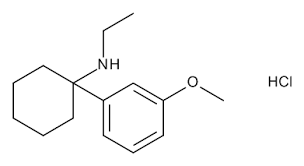
3-Me-PCE HCl (3-Methyleticyclidine hydrochloride) is a synthetic dissociative research chemical belonging to the arylcyclohexylamine class. Structurally related to eticyclidine (PCE), the 3-methyl substitution on the phenyl ring distinguishes this analog and alters its pharmacological profile as an NMDA receptor antagonist. The hydrochloride salt form enhances aqueous solubility and crystalline stability. RChems EU supplies 3-Me-PCE as a high-purity crystalline hydrochloride salt with verified 99%+ purity, ensuring reproducible results for in vitro receptor binding assays, neuropharmacological investigations, and structure-activity relationship (SAR) studies.
Physical and Chemical Properties
-
Chemical Name: 3-Methyleticyclidine hydrochloride; N-ethyl-1-(3-methylphenyl)cyclohexan-1-amine hydrochloride
-
Molecular Formula: C₁₅H₂₃N · HCl
-
Molecular Weight: 253.81 g/mol (freebase: 217.35 g/mol)
-
Appearance: White to off-white crystalline powder
-
Purity: ≥99% (Verified by HPLC, NMR, MS)
-
Solubility: Soluble in water, ethanol, and DMSO (HCl salt)
-
CAS Number: Not publicly assigned (research chemical)
-
Storage: Cool, dry, dark environment (room temperature recommended)
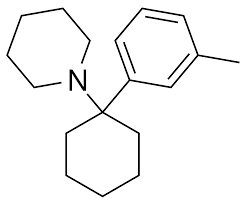
3-Me-PCP (3-methylphencyclidine)
3-Me-PCP (3-methylphencyclidine) is a synthetic dissociative research chemical belonging to the arylcyclohexylamine class. Structurally related to phencyclidine (PCP), the 3-methyl substitution on the phenyl ring distinguishes this analog and alters its pharmacological profile as an NMDA receptor antagonist. RChems EU supplies 3-Me-PCP as a high-purity crystalline powder with verified 99%+ purity, ensuring reproducible results for in vitro receptor binding assays, neuropharmacological investigations, and structure-activity relationship (SAR) studies.
Physical and Chemical Properties
-
Chemical Name: 3-methylphencyclidine; 1-(1-(3-methylphenyl)cyclohexyl)piperidine
-
Molecular Formula: C₁₈H₂₇N
-
Molecular Weight: 257.41 g/mol
-
Appearance: White to off-white crystalline powder
-
Purity: ≥99% (Verified by HPLC, NMR, MS)
-
Solubility: Soluble in ethanol, DMSO, and organic solvents
-
CAS Number: Not publicly assigned (research chemical)
-
Storage: Cool, dry, dark environment (room temperature recommended)
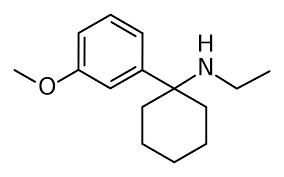
3-MeO-PCE (3-methoxyeticyclidine)
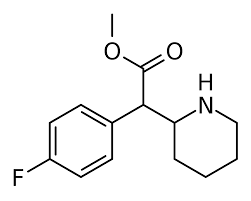
4F-MPH (4-Fluoromethylphenidate)
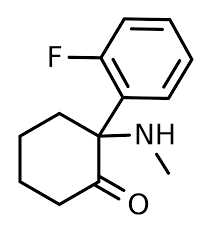
Chem-mist 2F-DCK spray 30%

D-MEX DMXE 40mg Pellets
DeschloroEtizolam 5 MG Pellets
